Table of Content
This brief drop in blood flow to the brain causes a person to faint. The healthcare provider who does your tilt table test will probably need some time to evaluate the outcomes of your test to compile a report. It may take several days for the team to be able to combine all of this information to determine the next steps. Any medicines used during the test should leave your system in 15 minutes. If you were told to skip daily medicines before the test, ask if and when you should start taking them again. You’re likely to be sent home right after the test.
Doctors will ask their patients whether their loss of consciousness felt like previous episodes. They may also ask family, friends, or partners to be present during the test. These individuals can compare previous episodes to any test-induced loss of consciousness. The test begins with the individual lying on the table.
TIPS TO PREPARE FOR A TILT TABLE TEST
It assesses the autonomic control of sweating and body temperature regulation. The powder will change from orange to purple if sweating occurs. Talk to your health care provider about the risks and benefits of these drugs to determine which one is best for you. Sound waves are used to create pictures of the heart in motion.
Follow all directions you're given for not eating and drinking before the test. You can replicate this test easily at home while you’re waiting to speak to your doctor with the Poor Man’s Tilt Table Test. Click here to for some great articles from the NormaLyte staff and contributors.
Clinical trials
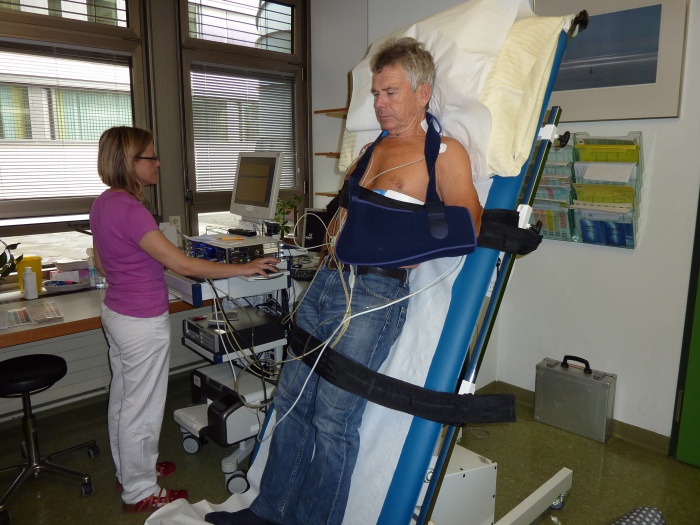
This test changes a person’s position — from lying down to upright — while they are strapped in place. Once enough information is obtained, you will be lowered to a flat position and allowed to rest for a while. Your heart rate and blood pressure will be monitored. A nurse will continue to tilt the table upward about 60 degrees or more, essentially making you upright. They’ll repeatedly measure your blood pressure, heart rate, and oxygen levels to detect if there are any changes. And even if they do, it’s safer than fainting on your own in an uncontrolled situation.

This test measures the response of the small nerve fibers innervating the sweat glands. QSART can be used to assess disorders of the autonomic nervous system and peripheral neuropathies. There is a reservoir of the neurotransmitter acetylcholine which is released onto the skin with mild electrical stimulation.
What is syncope?
No eating or drinking before the test.This can help prevent any nausea or vomiting that may occur. For example, POTS sometimes occurs because of elevated adrenaline levels. The medication is usually a pill containing 0.4 mg of nitroglycerine. However, the staff may instead administer it through the IV line. They may insert an IV line so they can easily administer medicines and fluids if they need to.
Blood pressure decreases, causing dizziness or fainting during the test. If you don't faint or have other symptoms after 45 minutes, you might receive the drug isoproterenol through an IV line in your arm. The drug might prompt the reflex that causes you to faint.
You should expect to recover within a few hours, even if you experience dizziness or loss of consciousness during the test. Do not stop taking any medication without first talking to your healthcare provider. These include blood pressure, breathing rate, and pulse. You suspect that you may have a form of dysautonomia called POTS, or Postural Orthostatic Tachycardia Syndrome. However, you haven’t been diagnosed with it officially.

Your blood pressure, heart rhythm and heart rate will be constantly monitored throughout the test. Blood pressure cuffs will be placed around one of your arms and a finger . The cuffs are attached to monitors used throughout the test. The finger cuff will pump nonstop throughout the test. The arm cuff will check your blood pressure every 4 to 10 minutes. If you have diabetes, or take insulin, ask your doctor how you should take your medications on the day of your test.
Gamma Knife surgery is an effective treatment option for people with certain brain tumors, lesions, or other conditions that originate in the brain. After the test is over, or if you feel faint during the test, a nurse and other medical professionals may move you to another bed or chair. You’ll likely be asked to remain in the facility’s recovery area for 30 to 60 minutes. A nurse will administer a medication called isoproterenol that’ll cause your heart to beat faster and harder.
The major neurotransmitter of this system is norepinephrine, a catecholamine. Therefore, the catecholamine test can assess levels of sympathetic activity in a variety of situations. It is common to use an IV for blood draws to prevent distress at the time of the reading, as this would skew the results. Blood will be drawn after the patient has been horizontal for minutes, and then again after being tilted to a standing position. Treatment for orthostatic hypotension is directed at the cause rather than the low blood pressure itself.
This highlights symptomatic episodes for a reading by your doctor. The Valsalva Maneuver requires you to blow into a tube to maintain 40 mmHg for 15 seconds while your heart rate and blood pressure are being recorded. This may show abnormal baroreflex results in those with moderate to severe POTS. There is conflicting evidence on the accuracy of this particular test. Children and teens age , an increase in heart rate of of 40 beats per minute or more when standing, it may be POTS. This quick and painless test measures the electrical activity of the heart.
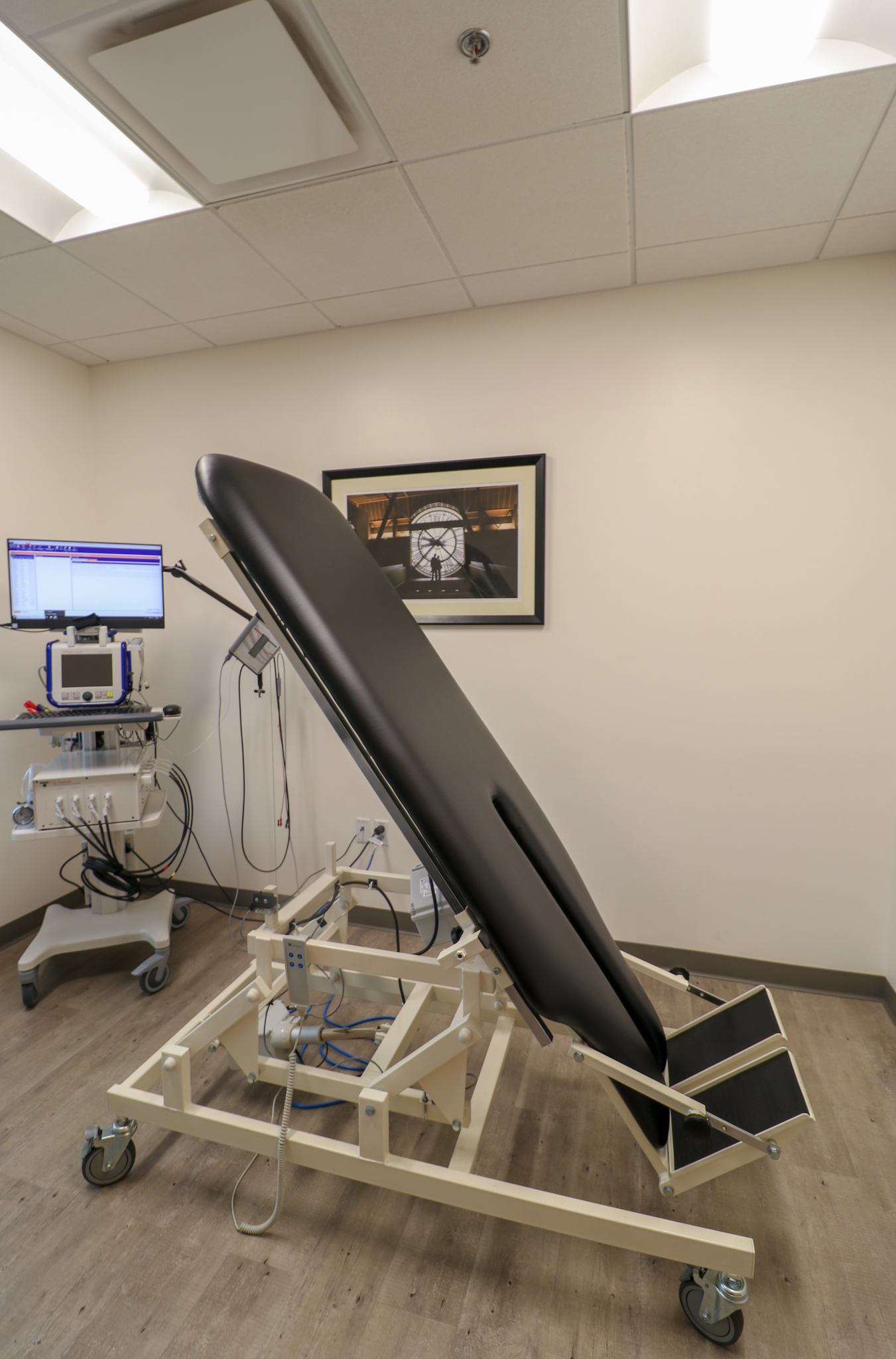
If your vital signs do change or you don’t feel well during the test, a nurse will stop the test. If you have a question about a particular medication, ask your doctor. The purpose of the tilt-table test is for a doctor to view firsthand the symptoms you experience when changing position. Potential risks of the test include nausea, dizziness, and fainting. If your blood pressure does not fall during the test, and you have no other symptoms, the test results are negative . You may feel your heartbeat increase because of the medicine.


No comments:
Post a Comment